Read our coffeebeancrypto guide to tokenising agricultural commodities, exploring blockchain supply chains, real-world assets, and digital token markets.
Table of Contents
- Introduction
- Understanding Real-World Assets
- Supply Chain and Traceability
- Market Liquidity and Trading
- The Regulatory Landscape
- Questions from Our Readers
- Comparison of Tokenisation Approaches
- Practical Tips
- Final Thoughts on the coffeebeancrypto guide
Quick Summary
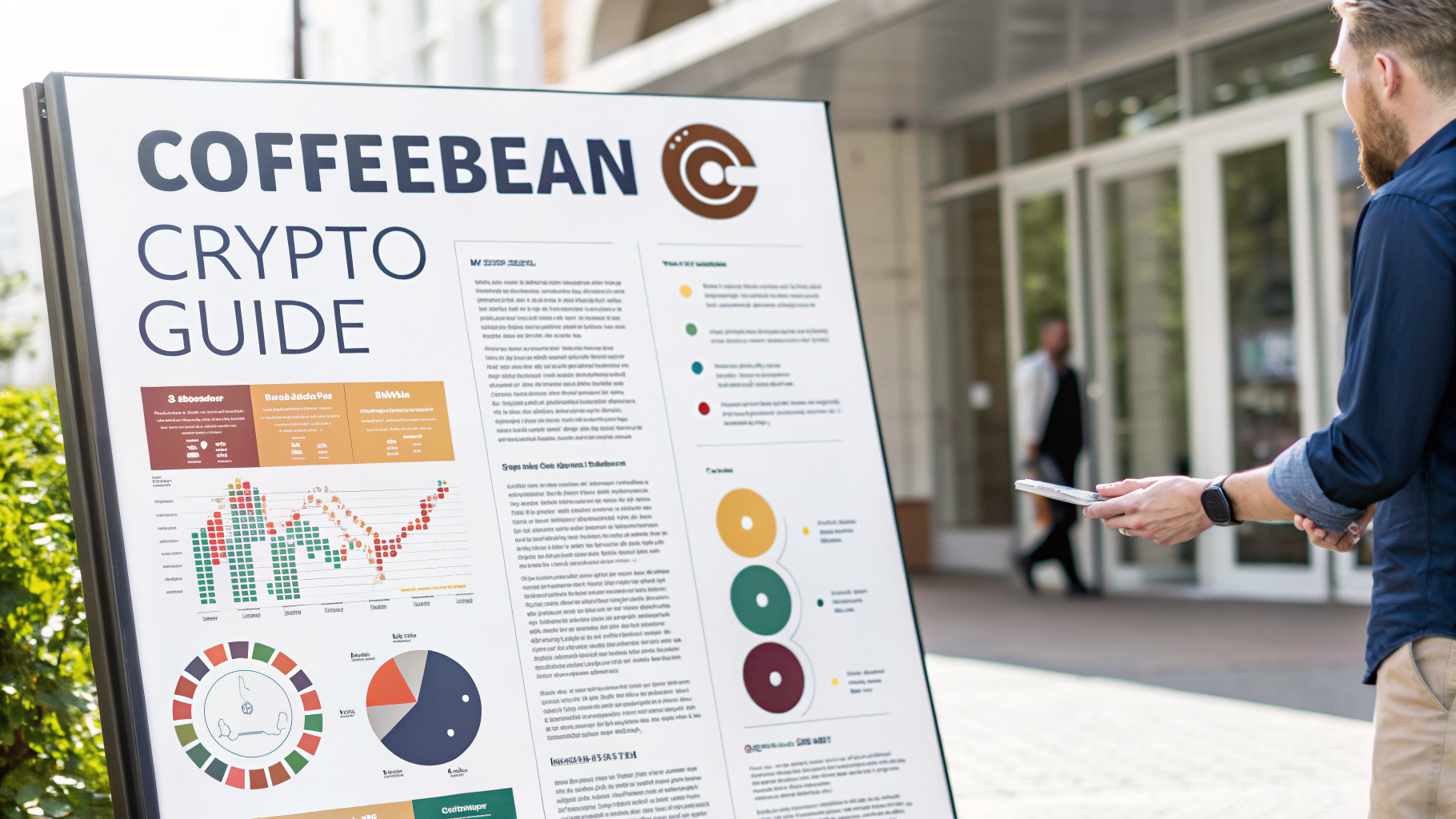
This coffeebeancrypto guide is a comprehensive framework for understanding how agricultural commodities are tokenised on digital platforms. It covers the integration of physical assets with blockchain technology, highlighting supply chain transparency, fractional ownership, and the regulatory considerations necessary for modern retail investors.
Market Snapshot
- The tokenised real-world asset market reached an estimated value of 2.5 billion US dollars by the end of 2023 (Boston Consulting Group, 2023)[1].
- Global coffee production in the 2023/24 coffee year is projected at 178 million 60-kg bags (International Coffee Organization, 2024)[2].
- Coffee futures trading on ICE Futures U.S. averaged approximately 42,000 contracts per day in the first quarter of 2024 (Intercontinental Exchange, 2024)[3].
Introduction
Our coffeebeancrypto guide provides essential insights into the rapidly evolving intersection of agricultural commodities and blockchain technology. As digital platforms mature, the tokenisation of physical goods has moved from theoretical concepts to practical applications. This coffee bean crypto tutorial explores how real-world assets are being brought on-chain, creating new opportunities for fractional ownership and enhanced liquidity.
The transition from traditional commodity trading to decentralized finance requires a deep understanding of both physical supply chains and smart contracts. By examining market data and industry trends, this cryptocurrency coffee bean handbook illuminates the mechanisms that connect off-chain legal rights with on-chain representations. Whether you are a retail investor or an industry professional, understanding these digital tokens is crucial for navigating the future of asset backing and traceability.
Understanding Real-World Assets in Tokenisation
The foundation of any coffeebeancrypto guide rests on a clear definition of real-world assets and their digital counterparts. Tokenisation involves creating digital tokens that represent ownership or rights to physical assets, such as agricultural commodities, real estate, or precious metals. This process transforms otherwise illiquid assets into tradable instruments on digital platforms, enabling instant settlement and greater transparency.
According to industry experts, the real promise of this technology lies in its ability to democratize access to traditional markets. “The real promise of tokenisation lies in making otherwise illiquid assets tradable on digital platforms, with instant settlement and much greater transparency,” notes Hyun Song Shin, Economic Adviser at the Bank for International Settlements (BIS, 2023)[4]. For foundational knowledge on digital assets, the Bank for International Settlements research on tokenisation offers comprehensive institutional insights.
Boston Consulting Group projects that tokenised real-world assets could represent up to 16 trillion US dollars in value by 2030 in a bullish scenario (Boston Consulting Group, 2023)[1]. This massive projected growth underscores the importance of robust crypto coffee bean instructions for market participants. When physical goods like coffee beans are tokenised, the resulting digital assets must be backed by verifiable data and secure storage facilities. The integration of smart contracts ensures that ownership transfers occur automatically upon payment, reducing counterparty risk and streamlining the settlement process.
Supply Chain Transparency and Traceability
A critical component of this coffee bean blockchain manual is the role of distributed ledgers in enhancing supply chain transparency. Agricultural commodities often pass through numerous intermediaries before reaching the end consumer, creating opportunities for fraud and inefficiency. By recording every transaction and movement on a blockchain, stakeholders can verify the provenance and quality of the underlying physical assets.
An estimated 40 percent of supply-chain blockchain projects focus on improving traceability and provenance for agricultural or food products (World Economic Forum, 2023)[5]. This focus is driven by consumer demand for ethically sourced goods and the need for regulatory compliance. When a coffeebeancrypto guide addresses supply chain mechanics, it must highlight how sensors and manual inputs feed data into the blockchain. This immutable record ensures that the digital token accurately reflects the physical state and location of the commodity.
Tom Robinson, Co-founder and Chief Scientist at Elliptic, emphasizes that “tokenization of real-world assets has the potential to transform supply chains by enabling fractional ownership, improving transparency and unlocking new sources of liquidity” (Elliptic, 2024)[6]. This transformation requires a fundamental rethinking of how agricultural cooperatives, exporters, and roasters interact. For those exploring cool math games, the cryptographic hashing used in these supply chains offers a fascinating real-world application of complex logical principles.
Market Liquidity and Commodity Trading
Evaluating market liquidity is essential for any comprehensive coffeebeancrypto guide focused on agricultural tokens. Traditional commodity markets rely on centralized exchanges and complex futures contracts to provide liquidity and price discovery. In contrast, tokenised markets operate on decentralized exchanges, allowing for continuous, peer-to-peer trading without the constraints of traditional market hours or geographic boundaries.
The underlying physical market for coffee is highly liquid and deeply established. Coffee futures trading on ICE Futures U.S. averaged approximately 42,000 contracts per day in the first quarter of 2024 (Intercontinental Exchange, 2024)[3]. This deep liquidity in traditional markets provides a strong foundation for digital derivatives and tokenised representations. Furthermore, the ICO projects world coffee consumption at 177 million 60-kg bags in 2023/24, nearly matching production and underscoring tight fundamentals for coffee-backed assets (International Coffee Organization, 2024)[2].
This rapid growth indicates a strong appetite for digital exposure to physical goods. However, bridging the gap between traditional futures markets and on-chain spot trading requires sophisticated oracle networks to feed accurate pricing data to smart contracts. Investors utilizing this cryptocurrency coffee bean handbook must understand that while digital tokens offer continuous trading, the physical delivery and redemption processes still operate on traditional logistical timelines. Balancing the speed of digital settlement with the realities of physical shipping remains a primary challenge for protocol developers.
Navigating the Regulatory Landscape
The final pillar of a robust coffeebeancrypto guide involves understanding the complex regulatory environment governing digital assets. Because tokenised commodities represent ownership of physical goods, they often fall under existing securities and commodities regulations, regardless of the underlying technology. Navigating this landscape requires careful attention to jurisdictional differences and compliance frameworks.
Teunis Brosens, Head Economist for Digital Finance and Regulation at ING, points out that “from a regulatory perspective, tokenised real-world assets are still subject to existing securities and commodities rules, regardless of whether they live on a blockchain” (ING, 2024)[7]. This means that issuers must comply with know-your-customer (KYC) and anti-money laundering (AML) requirements, just as traditional financial institutions do.
Retail investors are increasingly drawn to tokenised commodities because they combine the familiarity of physical goods with the flexibility of crypto-native trading venues (University College Dublin, 2024)[8]. While this percentage of market participation is growing, regulatory clarity is necessary to attract institutional capital. Issuers must ensure that the legal entity holding the physical coffee beans in a warehouse has a binding agreement with the smart contract governing the digital tokens. If you need further assistance understanding these compliance structures, you can always contact our research team for more detailed insights.
Questions from Our Readers
What is the main benefit of tokenising coffee beans?
The primary benefit of tokenising coffee beans is the enhancement of supply chain transparency and the introduction of fractional ownership. By creating digital representations of physical coffee reserves, investors and consumers can trace the exact origin, quality, and journey of the beans from farm to cup. This process eliminates intermediaries, reduces fraud, and allows smaller retail investors to participate in commodity markets that were previously accessible only to large institutional buyers. Furthermore, smart contracts automate payments and ownership transfers, ensuring that farmers receive fair compensation more quickly.
How do digital tokens maintain their connection to physical assets?
Digital tokens maintain their connection to physical assets through a combination of secure warehousing, legal agreements, and oracle networks. The physical coffee beans are stored in audited, climate-controlled facilities, and a trusted third party verifies the inventory regularly. Legally, the smart contract governing the token is tied to a special purpose vehicle or legal entity that holds the title to the physical goods. Additionally, oracle networks feed real-world data, such as warehouse receipts and quality inspection reports, onto the blockchain to ensure full backing.
Are tokenised agricultural commodities subject to financial regulations?
Yes, tokenised agricultural commodities are generally subject to existing financial regulations. Because these digital tokens represent ownership or investment rights in physical goods, regulatory bodies often classify them as securities or commodity derivatives. This classification means that issuers and trading platforms must comply with strict know-your-customer (KYC) and anti-money laundering (AML) protocols. Furthermore, projects must adhere to consumer protection laws and provide transparent disclosures regarding the risks associated with physical storage, market volatility, and smart contract vulnerabilities across multiple jurisdictions.
What risks should investors consider before buying tokenised coffee?
Investors should consider several key risks before purchasing tokenised coffee, including physical degradation, smart contract vulnerabilities, and market liquidity. Physical coffee beans are perishable and susceptible to pests, mold, and climate fluctuations, which can diminish their value if storage facilities fail. On the technical side, bugs or exploits in the underlying smart contracts could lead to the loss of digital assets. Additionally, while traditional coffee futures markets are highly liquid, secondary markets for specific tokenised coffee projects may suffer from low trading volumes, making it difficult to sell tokens quickly.
Comparison of Tokenisation Approaches
Different protocols utilize varying methods to bridge physical commodities with digital networks, each offering distinct trade-offs regarding decentralization and operational complexity. Evaluating these models is a crucial step in applying any coffeebeancrypto guide to real-world investment strategies.
| Approach | Custody Model | Decentralization Level | Primary Use Case |
|---|---|---|---|
| Direct Backing | Centralized audited vaults | Low | Retail investment and physical redemption |
| Synthetic Derivatives | No physical custody (oracle priced) | High | Price speculation and hedging |
| Supply Chain Tracking | Distributed logistics network | Medium | Provenance verification and B2B trade |
Direct backing provides the highest security for physical redemption, while synthetic derivatives offer greater capital efficiency for traders who only seek price exposure without handling the underlying agricultural goods.
Practical Tips for Navigating Tokenised Markets
Successfully participating in tokenised commodity markets requires a disciplined approach to research and risk management. First, always verify the auditing practices of the physical custodians holding the underlying assets. Regular, third-party proof-of-reserve reports are essential to ensure that the digital tokens remain fully backed by physical inventory. Second, evaluate the legal structure connecting the smart contract to the physical goods. A robust legal framework ensures that token holders have enforceable rights in the event of custodian bankruptcy or supply chain disruptions.
Additionally, pay close attention to the oracle networks providing pricing and quality data to the blockchain. Reliable oracles prevent price manipulation and ensure accurate valuations during market volatility. When exploring new protocols, start with small allocations to test the platform’s user interface, withdrawal processes, and customer support responsiveness. Monitor the secondary market liquidity to ensure you can exit positions without excessive slippage. Finally, stay updated on evolving regulatory guidelines, as compliance requirements can significantly impact the operational viability of real-world asset platforms and dictate which jurisdictions permit retail participation.
Final Thoughts on the coffeebeancrypto guide
The integration of agricultural commodities into decentralized networks represents a significant leap forward for global trade and financial inclusion. This coffeebeancrypto guide has highlighted the critical mechanisms of supply chain transparency, market liquidity, and regulatory compliance necessary for success. As tokenised real-world assets continue to mature, they will offer unprecedented access to physical markets for a broader range of participants. To stay informed about the latest developments in digital assets and blockchain technology, continue exploring the educational resources and analytical insights available on superlewis.net. Understanding these foundational concepts will prepare you for the next wave of digital commodity innovation.
Learn More
- The Tokenization of Real-World Assets. Boston Consulting Group.
https://www.bcg.com/publications/2023/the-tokenization-of-real-world-assets - Coffee Market Report. International Coffee Organization.
https://www.ico.org/documents/cy2023-24/cmr-0524-e.pdf - ICE Futures US Quarterly Report Q1 2024. Intercontinental Exchange.
https://www.theice.com/publicdocs/futures/ICE_Futures_US_Quarterly_Report_Q1_2024.pdf - BIS Quarterly Review: Finance-related use cases of tokenisation. Bank for International Settlements.
https://www.bis.org/publ/qtrpdf/r_qt2312b.htm - Building Value with Blockchain Technology. World Economic Forum.
https://www.weforum.org/whitepapers/building-value-with-blockchain-technology - Tokenisation: The Future of Real-World Assets on the Blockchain. Elliptic.
https://www.elliptic.co/blog/tokenisation-the-future-of-real-world-assets - Real-World Asset Tokenisation: Hype vs. Regulation. ING.
https://think.ing.com/articles/real-world-asset-tokenisation-hype-vs-regulation/ - Tokenised Commodities and the New Retail Investor. University College Dublin.
https://www.ucd.ie/quinn/research/insights/tokenised-commodities-and-the-new-retail-investor/
For more about Coffeebeancrypto guide, see Coffeebeancrypto Guide.