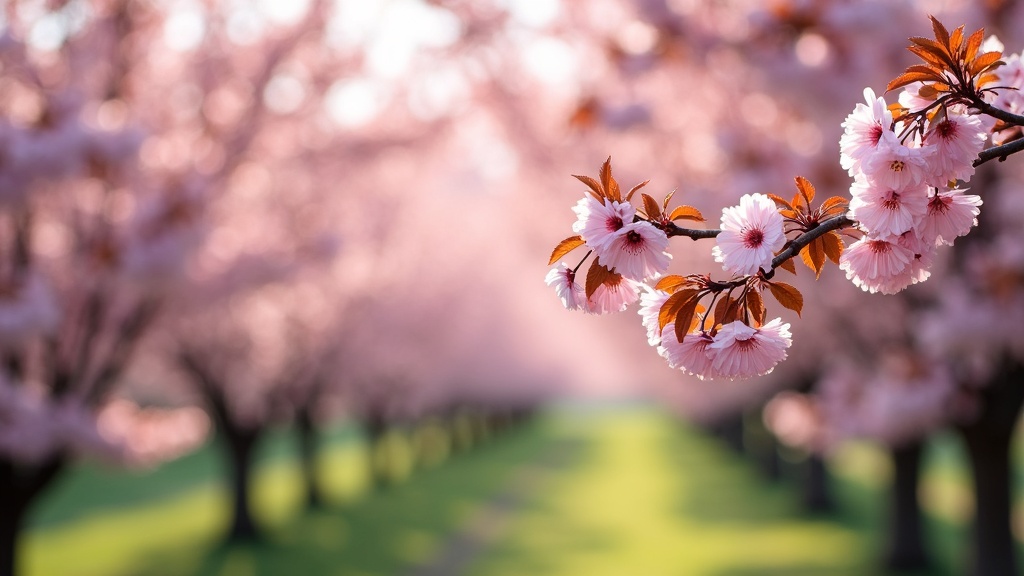
Learn where to find the best ornamental cherry trees for sale and how to select healthy cultivars suited to your climate and landscape needs.
Table of Contents
- Understanding Ornamental Cherry Trees for Sale
- Selecting Healthy Specimens
- Planting and Early Care
- Disease Management and Longevity
- Frequently Asked Questions
- Comparison: Online vs. Local Nursery
- Practical Tips for Buyers
- Final Thoughts on Ornamental Cherry Trees for Sale
Quick Stats: Ornamental Cherry Trees
- The U.S. nursery and greenhouse industry generated total sales of 18.1 billion dollars in 2024 (USDA NASS, 2024)[1]
- Online sales represented 21 percent of total sales channels for U.S. nursery operations in 2024 (USDA NASS, 2024)[1]
- The average retail price for a container-grown ornamental cherry tree (5–7 gallon size) in spring 2025 was 85 to 120 dollars, with a median price of 99 dollars (AmericanHort, 2025)[2]
The market for ornamental cherry trees for sale has grown significantly, driven by a surge in home landscaping and the increasing availability of these trees through both brick-and-mortar nurseries and online platforms. As a result, today’s buyers have more choices than ever when it comes to selecting the perfect flowering cherry for their garden. This guide explores the key considerations for purchasing and caring for these beautiful trees, helping you make an informed decision that will reward you with years of stunning spring color.
Understanding Ornamental Cherry Trees for Sale
Ornamental cherry trees for sale encompass a wide range of cultivars, each offering unique flower colors, forms, and growth habits. These trees are primarily grown for their breathtaking spring blossoms, which can range from pure white to deep pink, and from single-petal simplicity to lush, double-flowered pompoms. The most popular species include the Japanese flowering cherry (Prunus serrulata), the Yoshino cherry (Prunus × yedoensis), and the weeping Higan cherry (Prunus subhirtella var. pendula).
According to Dr. Gary Gao, Professor and Extension Specialist at The Ohio State University, “When selecting ornamental cherry trees, it is critical to match the cultivar to your local climate and site conditions, because many of the most visually spectacular varieties are also among the most sensitive to temperature extremes and soil drainage.”[3] This advice underscores the importance of doing your homework before making a purchase. A tree that thrives in the Pacific Northwest may struggle in the hot, humid summers of the Southeast or the dry, cold winters of the Great Plains.
For gardeners with limited space, compact and semi-dwarf varieties offer an excellent solution. Guy Barter, Chief Horticulturist at the Royal Horticultural Society, notes that “for most gardens, compact ornamental cherries grafted on semi‑dwarf rootstocks give the best balance of flower display and manageable size, and customers should always check the eventual height listed by reputable nurseries before they buy.”[4] A 2025 survey of U.S. retail nurseries found that 47 percent had increased their stock of ornamental cherry cultivars over the previous three years in response to customer demand (Garden Center Magazine, 2025)[5], indicating the strong and growing interest in these trees.
Selecting Healthy Specimens
When you find ornamental cherry trees for sale, whether at a local garden center or through an online nursery, careful inspection is crucial. For in-person purchases, look for a tree with a strong, central leader (the main trunk) and a well-balanced branch structure. The root system should be well-developed but not pot-bound, with roots circling the inside of the container. Check the leaves for any signs of discoloration, spots, or pests. A healthy tree will have vibrant green leaves (depending on the cultivar) and no visible damage to the bark.
For online purchases, the selection process is different but equally important. Reputable online nurseries will provide detailed descriptions of each cultivar, including its mature size, hardiness zone, sun requirements, and bloom characteristics. They should also have clear policies on shipping, guarantees, and customer support. Dr. Andrew Hirons, Senior Lecturer in Arboriculture at University Centre Myerscough, advises that “potential buyers should pay close attention to rootstock and nursery production methods, which have a profound impact on establishment success and long‑term stability.”[6] A tree grown on a vigorous, disease-resistant rootstock is far more likely to establish well and live a long life in your landscape.
Planting and Early Care
Once you have secured ornamental cherry trees for sale and brought them home, proper planting is the single most important factor for their long-term health. These trees require full sun (at least six hours of direct sunlight per day) and well-drained, slightly acidic soil. Poor drainage is a common cause of failure, as cherry trees are highly susceptible to root rot in waterlogged conditions. Before planting, amend heavy clay soils with organic matter to improve drainage.
To plant, dig a hole that is twice as wide as the root ball but no deeper. The top of the root ball should be level with the surrounding soil. Backfill with the native soil, water deeply, and apply a 2-3 inch layer of organic mulch around the base, keeping it away from the trunk to prevent rot. Staking is generally not necessary for container-grown trees unless they are in a very windy location. In the first year, consistent watering is critical, especially during dry spells. A deep watering once a week is usually sufficient, but adjust based on rainfall and soil type.
Dr. Linda Chalker-Scott, Extension Urban Horticulturist at Washington State University, emphasizes that “buyers looking for flowering cherries should understand that these trees are relatively short-lived in urban landscapes, and investing in proper site preparation and after‑planting care will often double their functional lifespan.”[7] This means that the effort you put into planting and early care directly pays off in the longevity and health of your tree.
Disease Management and Longevity
One of the most significant challenges for owners of ornamental cherry trees for sale is managing common diseases. The two most prevalent issues are bacterial canker and shot hole disease. Bacterial canker causes sunken, oozing lesions on branches and can eventually girdle and kill the tree. Shot hole disease manifests as small, purple-brown spots on leaves that drop out, leaving a “shot-hole” appearance. Dr. John R. Clark, Distinguished Professor of Horticulture at the University of Arkansas System Division of Agriculture, states that “disease resistance should be a primary consideration when homeowners purchase ornamental cherry trees, because once bacterial canker or shot hole becomes established, it is very difficult to manage with cultural practices alone.”[8]
Preventative care is the best strategy. This includes selecting disease-resistant cultivars, ensuring good air circulation by proper pruning, and avoiding overhead watering, which can spread fungal and bacterial pathogens. Pruning should be done in late summer or early autumn when the tree is dormant, as pruning in winter or early spring can create entry points for pathogens. Remove any dead, diseased, or crossing branches promptly.
With proper care, a healthy ornamental cherry can live for 15 to 25 years, though some cultivars in ideal conditions can last longer. The key to maximizing this lifespan is a combination of choosing the right tree, planting it correctly, and providing consistent, attentive care. For a wide selection of healthy, well-cared-for specimens, consider exploring the range of ornamental cherry trees for sale available from specialized growers who prioritize rootstock quality and cultivar selection.
Important Questions About Ornamental Cherry Trees
How long does it take for a newly planted ornamental cherry tree to bloom?
What is the best time of year to plant ornamental cherry trees?
Can I grow an ornamental cherry tree in a container or pot?
Do ornamental cherry trees produce edible fruit?
Comparison: Online vs. Local Nursery for Ornamental Cherry Trees
When searching for ornamental cherry trees for sale, buyers typically choose between online nurseries and local garden centers. Each option has distinct advantages. Online retailers often offer a much wider selection of cultivars and sizes, and they can deliver trees directly to your door. Local nurseries, on the other hand, allow you to inspect the tree in person and often provide more personalized, local advice. The table below compares key features of both purchasing channels.
| Feature | Online Nursery | Local Garden Center |
|---|---|---|
| Selection of Cultivars | Very wide; hundreds of options | Limited to regional stock |
| Inspection Before Purchase | Not possible; rely on photos and descriptions | Full visual and physical inspection |
| Expert Advice | General, often via chat or email | Local, face-to-face, tailored to your climate |
| Shipping and Handling | Tree shipped in a box; potential for damage | No shipping; you transport it yourself |
| Price and Guarantees | Often lower prices; varying guarantees | Higher prices; often with strong local guarantees |
Practical Tips for Buyers
Finding the perfect ornamental cherry trees for sale requires a strategic approach. Here are actionable tips to guide your purchase and ensure a successful addition to your landscape.
- Research your hardiness zone. Only purchase cultivars rated for your USDA hardiness zone. A tree that is not cold-hardy will suffer winter damage or die. This is the single most important factor in cultivar selection.
- Check for graft union health. Most ornamental cherries are grafted. The graft union (the swollen area near the base of the trunk) should be smooth, well-healed, and free from cracks or cankers. A healthy graft union is critical for long-term stability.
- Plan for mature size. Do not be tempted by a small sapling. Always check the mature height and spread of the cultivar. A 25-foot tree will not thrive in a 10-foot space. Choose a size appropriate for your yard.
- Consider bloom time and color. Different cultivars bloom at different times, from early to late spring. By selecting trees with staggered bloom times, you can extend the flowering season in your garden from several weeks to over a month.
Final Thoughts on Ornamental Cherry Trees for Sale
Selecting the right ornamental cherry trees for sale and providing them with proper care can transform your landscape into a breathtaking spring spectacle. By focusing on cultivar selection, site preparation, and ongoing disease management, you can enjoy the beauty of these trees for many years. For more detailed information on specific cultivars and to see current availability, visit our resource page on ornamental tree selection.
Useful Resources
- Economics, Nursery and Greenhouse. United States Department of Agriculture, National Agricultural Statistics Service.
https://www.nass.usda.gov/Publications/AgCensus/2022/Online_Resources/Market_Value/Economics_Nursery_Greenhouse.pdf - Ornamental Pricing Benchmarks 2025. AmericanHort.
https://americanhort.org/wp-content/uploads/2025/04/ornamental-pricing-benchmarks-2025.pdf - Selecting Ornamental Trees for Ohio Landscapes. Dr. Gary Gao, The Ohio State University.
https://ohioline.osu.edu/factsheet/hg-500 - Choosing Ornamental Flowering Trees for Small Gardens. Guy Barter, Royal Horticultural Society.
https://www.rhs.org.uk/garden-inspiration/trees/choosing-flowering-trees - Independent Retail Nursery Survey 2025. Garden Center Magazine.
https://www.gardencentermag.com/fileuploads/2025-retail-nursery-survey-results.pdf - Selecting Nursery Stock for Urban Planting. Dr. Andrew Hirons, University Centre Myerscough.
https://www.trees.org.uk/Download.ashx?file=Media/Selecting-Nursery-Stock-Technical-Guide-2025.pdf - Life Expectancy of Urban Trees. Dr. Linda Chalker-Scott, Washington State University.
https://s3.wp.wsu.edu/uploads/sites/403/2025/04/urban-tree-longevity.pdf - Tree Fruit and Ornamental Disease Considerations. Dr. John R. Clark, University of Arkansas System Division of Agriculture.
https://www.uaex.uada.edu/publications/pdf/FSA6073.pdf