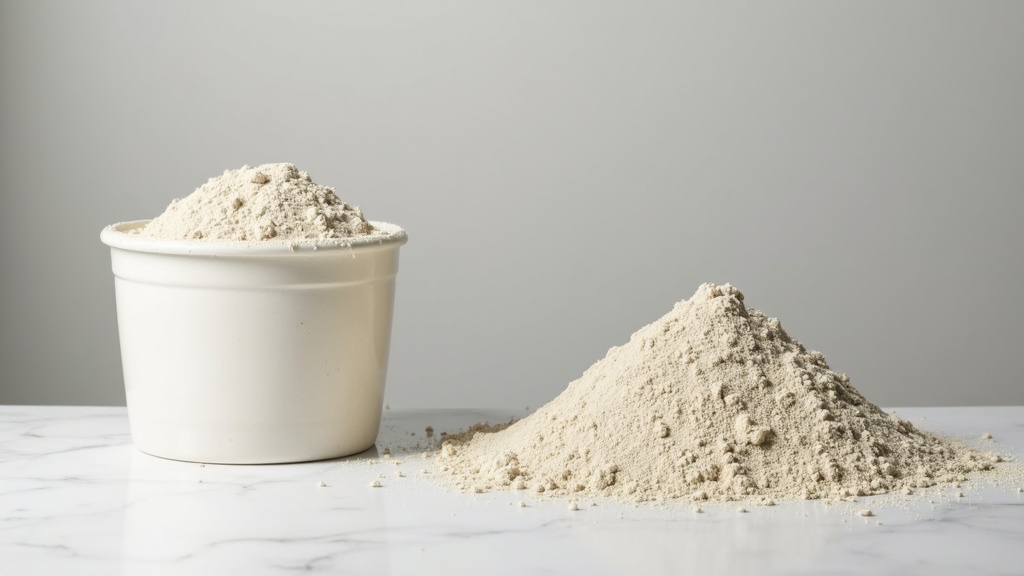
Readymix grout offers construction professionals and DIY users a consistent, time-saving alternative to site-mixed materials, with the global premixed market projected to reach nearly $1 billion by 2032. This article explores the key benefits, applications, market trends, and practical considerations for choosing readymix grout.
Table of Contents
- What Is Readymix Grout and Why It Matters
- Key Benefits of Using Readymix Grout
- Applications Across Construction and Mining
- Market Trends and Future Outlook
- Frequently Asked Questions
- Readymix Grout vs. Site-Mixed Grout
- Practical Tips for Using Readymix Grout
Article Snapshot: Readymix grout is a factory-formulated, pre-blended material that eliminates on-site mixing errors. It delivers consistent performance, reduces labor time by up to 50%, and is gaining traction in commercial construction, infrastructure, and specialized mining applications. The global market is growing steadily at over 4% CAGR.
Market Snapshot
- Global premixed grout market valued at $751 million in 2024 (Intel Market Research, 2024)[1]
- Ready-to-use grout and adhesive market projected to reach $3.47 billion by 2032 (Persistence Market Research, 2025)[3]
- Cement-based grout market estimated at $5 billion in 2025 (Archive Market Research, 2025)[4]
What Is Readymix Grout and Why It Matters
Readymix grout is a pre-blended, factory-formulated construction material that arrives on site ready for immediate use. Unlike traditional site-mixed grout, which requires workers to combine cement, sand, and water in precise proportions, readymix grout is manufactured under controlled conditions to guarantee consistent performance batch after batch. This predictability is critical in applications where structural integrity depends on uniform material properties.
The construction industry has increasingly adopted readymix grout because it addresses two persistent challenges: labor skill shortages and quality variability. According to Intel Market Research, the global premixed grout market was valued at $751 million in 2024 and is expected to grow at a compound annual growth rate (CAGR) of 4.1% through 2032[1]. This growth reflects a broader shift toward factory-formulated products that simplify on-site processes while maintaining high performance standards.
In specialized fields such as mining and tunneling, readymix grout formulations are engineered to meet demanding specifications for viscosity, setting time, and strength. For example, colloidal grout mixing equipment, such as that produced by specialized grout plant manufacturers, is designed to handle these advanced formulations efficiently. The material’s versatility makes it suitable for everything from tile installation in residential bathrooms to structural grouting in underground mines.
Key Benefits of Using Readymix Grout
Consistency and Quality Control
The most significant advantage of readymix grout is its consistent quality. Factory production ensures that every batch meets exact specifications for particle size distribution, water content, and chemical additives. This eliminates the common problem of on-site mixing errors that can lead to weak joints, cracking, or premature failure. The Intel Market Research Editorial Team notes that “premixed grout is increasingly preferred over site-mixed alternatives because it offers consistent performance, reduced installation time, and fewer on-site quality issues”[1].
Time and Labor Savings
Readymix grout dramatically reduces installation time. The Fact.MR Research Team reports that ready-to-use grout and adhesive solutions “can reduce installation time by 30% to 50% per square metre” compared to traditional site-mixed systems[2]. This time saving translates directly into lower labor costs and faster project completion, which is especially valuable in commercial projects where delays carry significant financial penalties.
Reduced Waste and Environmental Impact
Because readymix grout is precisely formulated, there is less material waste compared to site mixing, where over-ordering or incorrect proportions are common. Persistence Market Research Analysts highlight that “manufacturers of ready-to-use grout are focusing on sustainability and low-VOC formulations, as end users increasingly demand environmentally responsible products”[3]. This aligns with broader industry trends toward greener construction practices.
Applications Across Construction and Mining
Readymix grout is used across a wide range of industries, from residential construction to heavy civil engineering and underground mining. In the mining sector, grout is essential for stabilizing rock masses, filling voids, and securing ground support elements such as bolts and cables. The high-performance formulations used in these environments often require specialized mixing and pumping equipment, such as that provided by colloidal grout plant systems, to ensure proper hydration and consistent delivery.
In commercial construction, readymix grout is commonly used for tile installation, floor leveling, and anchoring structural components. The material’s ease of application makes it attractive for contractors facing labor shortages. Market Research Future Analysts observe that “tile grout manufacturers are increasingly launching premixed and ready-to-use products that address labor shortages on job sites by simplifying application and reducing the need for specialized installation skills”[5].
Infrastructure projects also benefit from readymix grout. The Spherical Insights Research Team notes that “grouting materials, including premixed and ready-mix formulations, are seeing steady demand growth as infrastructure projects and commercial construction increasingly specify high-performance, easy-to-apply products to control lifecycle costs”[4]. This includes applications in bridge bearing pads, tunnel linings, and dam foundation stabilization.
Market Trends and Future Outlook
The readymix grout market is experiencing robust growth driven by several key trends. The global ready-to-use grout and adhesive market, valued at $1,948.5 million in 2025 according to Persistence Market Research, is projected to reach $3,471.4 million by 2032, representing a CAGR of 8.6%[3]. This faster growth rate compared to the broader premixed grout market suggests increasing adoption of ready-to-use formulations specifically.
One major trend is the development of low-VOC and environmentally friendly formulations. As building codes become stricter and end users demand greener products, manufacturers are investing in sustainable chemistries that do not compromise on performance. Another trend is the rise of specialized formulations for niche applications, such as high-temperature resistance for industrial settings or rapid-setting products for emergency repairs.
The integration of digital tools and automation in grout application is also gaining momentum. For example, the Dra Go solutions platform helps contractors plan and manage grout application projects more efficiently. Additionally, the Dra Go guide provides practical insights for selecting the right grout type for specific project requirements. These resources reflect a broader industry move toward data-driven decision-making and process optimization.
Market growth is further supported by the expansion of infrastructure spending in developing economies. The cement-based grout market, which includes both site-mixed and readymix products, is estimated at $5 billion in 2025 and is projected to grow at a CAGR of 6% through 2033[4]. This indicates sustained demand across both traditional and innovative grouting solutions.
Frequently Asked Questions
What is the difference between readymix grout and site-mixed grout?
Readymix grout is factory-formulated and arrives on site ready for immediate use, while site-mixed grout requires workers to combine raw materials like cement, sand, and water on the job site. Readymix offers superior consistency, reduces installation time by 30–50%, and eliminates quality issues caused by human error in proportioning. Site-mixed grout may be cheaper per unit but often leads to higher waste and labor costs.
Can readymix grout be used in mining and tunneling applications?
Yes, specialized readymix grout formulations are engineered for demanding mining and tunneling environments. These products are designed to meet precise specifications for viscosity, setting time, and compressive strength. They are often used with colloidal grout mixing equipment to ensure proper hydration and consistent delivery. The formulations can be tailored for rock stabilization, void filling, and ground support bolt anchoring.
How long does readymix grout take to cure?
Curing time varies by formulation. Standard readymix grout typically achieves initial set within 1–4 hours and full cure within 24–48 hours at normal temperatures. Rapid-setting formulations can achieve initial set in as little as 15–30 minutes. Always follow the manufacturer’s instructions for temperature, humidity, and application thickness, as these factors significantly affect cure time.
Is readymix grout more expensive than site-mixed grout?
The per-unit cost of readymix grout is typically higher than raw materials for site mixing. However, when factoring in labor savings, reduced waste, and fewer quality-related rework costs, readymix grout often proves more economical overall. The 30–50% reduction in installation time cited by industry analysts can significantly lower total project costs, especially on large-scale commercial or infrastructure projects.
Readymix Grout vs. Site-Mixed Grout
Choosing between readymix and site-mixed grout depends on project scale, quality requirements, and labor availability. The table below summarizes the key differences to help contractors make informed decisions.
| Factor | Readymix Grout | Site-Mixed Grout |
|---|---|---|
| Consistency | High – factory-controlled | Variable – depends on operator skill |
| Installation Time | 30–50% faster | Slower due to mixing and cleanup |
| Material Waste | Low – precise formulation | Higher – over-ordering common |
| Labor Requirements | Minimal training needed | Skilled labor required |
| Cost per Unit | Higher | Lower |
| Total Project Cost | Often lower | Often higher due to labor and waste |
Practical Tips for Using Readymix Grout
To get the best results from readymix grout, consider the following actionable tips based on industry best practices and market research findings.
- Check the shelf life: Readymix grout has a finite shelf life, typically 6–12 months from manufacture. Always verify the expiration date before purchase and use older stock first.
- Follow mixing instructions precisely: Even though readymix grout is pre-blended, some formulations require adding a specific amount of water or activator. Use a measuring tool and follow the manufacturer’s guidelines to achieve the correct consistency.
- Prepare the substrate properly: The surface must be clean, dry, and free of dust, oil, or loose material. Proper substrate preparation ensures maximum bond strength and prevents delamination.
- Use appropriate equipment: For large projects, invest in quality mixing paddles and pumps designed for grout. Specialized equipment, such as that offered by colloidal grout plant manufacturers, can improve efficiency and consistency in demanding applications.
- Monitor temperature and humidity: Extreme temperatures can affect cure time and final strength. Work within the manufacturer’s recommended temperature range, typically 50–90°F (10–32°C).
Key Takeaways
Readymix grout represents a significant advancement in construction materials, offering consistent quality, faster installation, and reduced waste compared to traditional site-mixed alternatives. The market is growing steadily, driven by labor shortages, sustainability demands, and the need for predictable performance in critical applications from residential tiling to underground mining. For contractors and project managers looking to improve efficiency and reduce risk, adopting readymix grout is a practical step forward. To learn more about optimizing your grouting processes, explore the Dra Go guide for detailed project planning resources.
Further Reading
- Premixed Grout Market Outlook 2025–2032. Intel Market Research.
https://www.intelmarketresearch.com/premixed-grout-market-market-17072 - Ready-to-Use Grout and Adhesive Market. Fact.MR.
https://www.factmr.com/report/ready-to-use-grout-and-adhesive-market - Ready-to-Use Grout and Adhesive Market Size & Share. Persistence Market Research.
https://www.persistencemarketresearch.com/market-research/ready-to-use-grout-and-adhesive-market.asp - Grouting Material Market Analysis, Size, Trend, Forecasts 2023–2033. Spherical Insights.
https://www.sphericalinsights.com/reports/grouting-material-market - Tile Grout Market Size, Share & Growth Report 2035. Market Research Future.
https://www.marketresearchfuture.com/reports/tile-grout-market-8403